Printers are such an office staple that they aren’t noticed much in an office setup—that is, until something goes wrong with them. Then suddenly, everything slows down. Teams wait around for stalled print queues, IT scrambles to troubleshoot recurring issues in the print infrastructure, and important documents get delayed because one device jammed during the busiest hour of the day.
The problem usually isn’t a single broken printer. It’s a fragmented print environment with aging devices, reactive maintenance and device management, and no visibility into how the fleet is performing.
But here is where Xerox managed print services (MPS) change the conversation. Instead of constantly reacting to breakdowns, businesses can proactively manage performance, reliability, and uptime before disruptions start affecting operations.
Why Office Print Environments Struggle With Reliability
Most printer reliability issues build slowly. A device starts slowing down. Supplies aren’t replaced on time. One department overuses a machine while another device sits idle. Over time, these small inefficiencies compound into operational disruptions.
Many businesses also underestimate how dependent their workflows still are on printing. Contracts, invoices, onboarding documents, internal reports, and customer communications continue moving through office print environments every day. When devices fail, productivity drops immediately.
This is especially common in offices relying on disconnected hardware from multiple vendors without centralized oversight. Without structured print fleet management, teams often lack visibility into device health, usage patterns, and maintenance requirements.
The result is an environment where downtime becomes normalized instead of being addressed strategically.
What Actually Causes Printer Downtime in Offices
In most environments, printer issues and downtime stem from predictable issues that go unmanaged for too long.
Common Causes Include:
- Delayed maintenance and outdated firmware.
- Uneven workload distribution across devices.
- Supply shortages that interrupt workflows.
- Aging hardware operating beyond recommended lifecycle limits.
- Lack of centralized monitoring for fleet performance.
These issues are why many organizations search for ways to understand how to reduce printer downtime before it starts affecting broader business operations.
One of the biggest operational mistakes is relying entirely on reactive support. By the time employees notice a problem, productivity has already been impacted.
That’s why today’s office printer maintenance services increasingly focus on prevention instead of emergency response.
How Xerox Managed Print Services Improve Device Uptime and Office Workflow
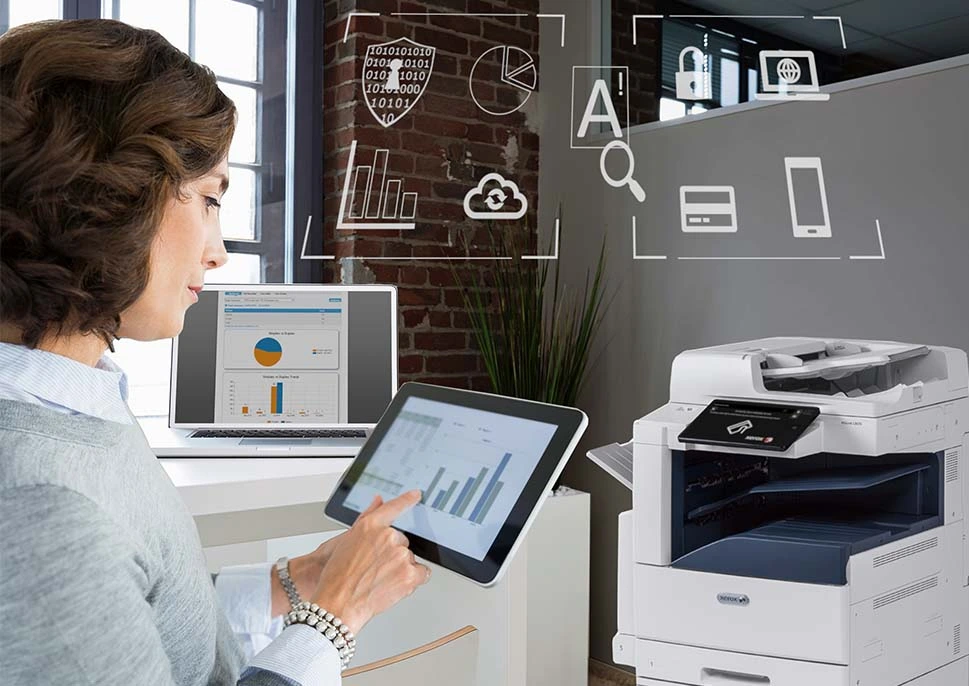
Reliable printing environments are the ones that are actively managed. With Xerox® MPS, device performance is continuously monitored so issues can be identified before they escalate into outages.
Key Improvements Include:
- Automated supply monitoring and replenishment.
- Centralized fleet visibility across locations.
- Remote diagnostics and issue resolution.
- Usage analytics to identify overloaded devices.
- Ongoing firmware and security updates.
This level of proactive printer monitoring helps organizations move away from reactive troubleshooting and toward consistent and seamless operational stability.
It also improves long-term multifunction printer reliability because devices are maintained according to actual usage conditions rather than arbitrary schedules.
For many businesses, one of the biggest managed print services benefits is simply predictability. Teams stop worrying about whether devices will work when needed.
Why Managed Service Support Reduces Operational Disruption
Downtime is as much a workflow issue as it is a hardware issue. When a critical device goes offline, employees improvise. Documents get rerouted manually, IT resources get pulled into troubleshooting, and productivity slows across departments.
Structured managed services reduce that disruption through:
- Faster response times for service issues.
- Better workload balancing across devices.
- Centralized maintenance planning.
- Reduced dependency on internal IT teams.
This is how businesses achieve meaningful printer downtime reduction rather than temporary fixes. Devices are maintained before performance deteriorates, which significantly reduces emergency service calls and workflow interruptions.
Organizations looking to reduce printing costs and downtime often find that operational consistency delivers just as much value as direct cost savings.
How Fleet Optimization Improves Office Productivity and Long-Term Reliability
One overlooked issue in many offices is unoptimized device utilization. Over time, this imbalance accelerates wear and creates avoidable service issues.
Optimized fleet management solves this by aligning devices with actual business requirements and includes:
- Consolidating redundant hardware.
- Matching device capabilities to department workloads.
- Replacing inefficient legacy equipment.
- Standardizing workflows across offices.
These adjustments help improve printer reliability while creating a more manageable and scalable print environment.
For businesses operating across multiple departments or locations, optimized infrastructure also simplifies support and reporting. Instead of managing disconnected systems, organizations gain a centralized operational view.
This is one reason many companies adopt office printer maintenance solutions as part of broader operational planning rather than treating printers as isolated devices.
Why Preventive Maintenance Matters More Than Emergency Repairs
Reactive repairs solve immediate problems. Preventive maintenance prevents those problems from happening repeatedly.
Within Xerox® managed services environments, devices are monitored continuously for performance irregularities, usage spikes, and maintenance needs. That allows support teams to intervene early before workflows are disrupted.
This Approach Improves Uptime By:
- Reducing recurring device failures.
- Extending hardware lifespan.
- Preventing avoidable service interruptions.
- Maintaining consistent performance across the fleet.
For most organizations, reliable uptime is less about fixing printers quickly and more about avoiding breakdowns altogether. The resulting operational stability becomes especially valuable during high-volume business periods where delays create broader downstream impacts.
Building a More Optimized and Efficient Office Through Reliable Printing
Reliable printing environments, such as the ones offered by Xerox® managed services, improve uptime, reduce interruptions, and proactively manage device health.
For organizations looking to strengthen reliability while simplifying support, integrating structured Managed Print Services into their operations provides a more sustainable approach to long-term print performance.
FAQs:
How do Xerox Managed Print Services (MPS) improve device reliability?
Managed print services from Xerox® continuously monitor device performance, automate maintenance processes, and identify issues before they escalate into failures. This proactive approach reduces disruptions while improving overall fleet stability.
What causes printer downtime in office environments?
Most printer downtime comes from preventable issues such as delayed maintenance, aging hardware, uneven device usage, outdated firmware, and a lack of centralized monitoring.
How do managed print services reduce printer downtime?
Managed services reduce downtime by combining proactive monitoring, preventive maintenance, automated supply management, and centralized fleet oversight to address issues before workflows are interrupted.
What is printer uptime in managed print services?
Printer uptime refers to the percentage of time devices remain operational and available for use. Higher uptime means fewer interruptions, stronger workflow continuity, and more reliable office productivity.