
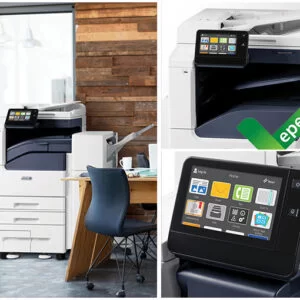
In finance, documents just pile up if not streamlined and handled efficiently. Monthly statements, compliance reports, audit trails, transaction records – everything moves in volume, and it moves fast. Though handling the volume is an issue, the real challenge is doing it without delays, errors, or security risks.
In such an environment, a multifunction printer for finance firms becomes more than just another office device to simplify printing. It acts as a control point, where documents are processed securely and routed without disrupting workflow. In fact, its connectivity helps streamline operations and enhance productivity. Without the right setup and security features, teams end up juggling manual processes, duplicate work, sensitive information, and fragmented systems. With the right printing capabilities and connected cloud storage, document handling becomes structured, predictable, and scalable.
Matching MFP Device Capability to Financial Workload Demands
Not every printer is built for financial environments. The difference shows up quickly when workloads increase. What works at low volume breaks under pressure in a demanding office environment.
When evaluating office printing solutions for the finance industry, firms should focus on operational fit:
- Sustained performance under heavy load: Devices must handle continuous output without slowing down during reporting cycles or audits.
- Large-capacity input and output handling: High-volume environments require fewer interruptions for refilling or sorting.
- Fast scanning with accuracy: Financial workflows rely heavily on digitization. Speed without accuracy creates downstream errors.
- Integration with financial systems: Documents should move directly into document management or accounting platforms without manual steps.
The right device keeps up and helps stabilize document processing workflows during peak demand.
What Enables High-Volume Workflows and Document Management Without Bottlenecks
Handling high-volume printing in finance firms is not just about speed—it’s about how efficiently documents move from one stage to the next.
A well-configured multifunction printer supports this by:
Automating repetitive tasks
Routine processes, such as scanning batches of documents or distributing reports, can be handled through predefined workflows. This reduces manual effort and minimizes human error.
Managing large print queues intelligently
Print jobs are processed in an organized flow, preventing delays and backlogs during peak periods.
Supporting simultaneous operations
Teams can print, scan, and copy at the same time without slowing each other down—critical in multi-user environments.
Maintaining consistency across outputs
Standardized settings ensure every document meets formatting and quality expectations, especially for compliance-driven reporting.
These capabilities form the backbone of finance firm document workflow solutions that scale with demand rather than collapse under it.
How Multifunction Printers Improve Workflow Efficiency and Office Productivity
Efficiency in finance is not just about speed—it’s about removing friction from every step. A well-chosen multifunction printer delivers this in several ways:
Reducing manual intervention
Documents no longer need to be physically moved, sorted, or reprocessed. Automated routing ensures they reach the right destination instantly.
Improving document accessibility
Digitized files can be retrieved quickly, reducing time spent searching through physical or poorly organized records.
Supporting distributed teams
Cloud-enabled access allows teams to work across locations without compromising document availability or security. It also enables mobile printing.
Minimizing downtime
Reliable devices reduce interruptions, which is critical when deadlines are tied to financial reporting cycles.
These improvements also reinforce secure printing for finance firms, where efficiency strengthens control.
Why Security and Volume Must Work Together for Workflow Automation
In financial environments, volume increases risk. The more documents moving through a system, the greater the exposure if that system isn’t secure.
A modern multifunction printer addresses this by:
- Restricting access through user authentication
- Holding print jobs until the user is present
- Encrypting data during transmission and storage
- Tracking activity for accountability and compliance
These measures ensure that even at scale, documents remain protected. Security becomes part of the workflow instead of an added step.
For firms looking to build a more resilient print environment, integrating Xerox® Multifunction Printers into their infrastructure provides both performance and protection in a single solution.
FAQs:
Can a multifunction printer for finance firms improve document security?
Yes, but only if these modern MFPs are designed with security built in and not added later. Features like cloud printing with user authentication, encrypted data transmission and handling, and secure print release ensure that sensitive documents are only accessed by the right people at the right time. This reduces the risk of exposure, especially in high-volume business environments where manual oversight isn’t practical.
How do multifunction printer solutions for finance firms reduce operational costs?
Multifunction printers help businesses in the finance industry save costs by eliminating inefficiencies. Automated workflows reduce manual labor. Fewer errors mean less rework. Centralized devices lower maintenance and supply costs. Over time, these improvements create a more predictable and controlled print environment, which is far easier to manage financially.